October 2, 2026
Geographical Destiny and the Maldives Economy
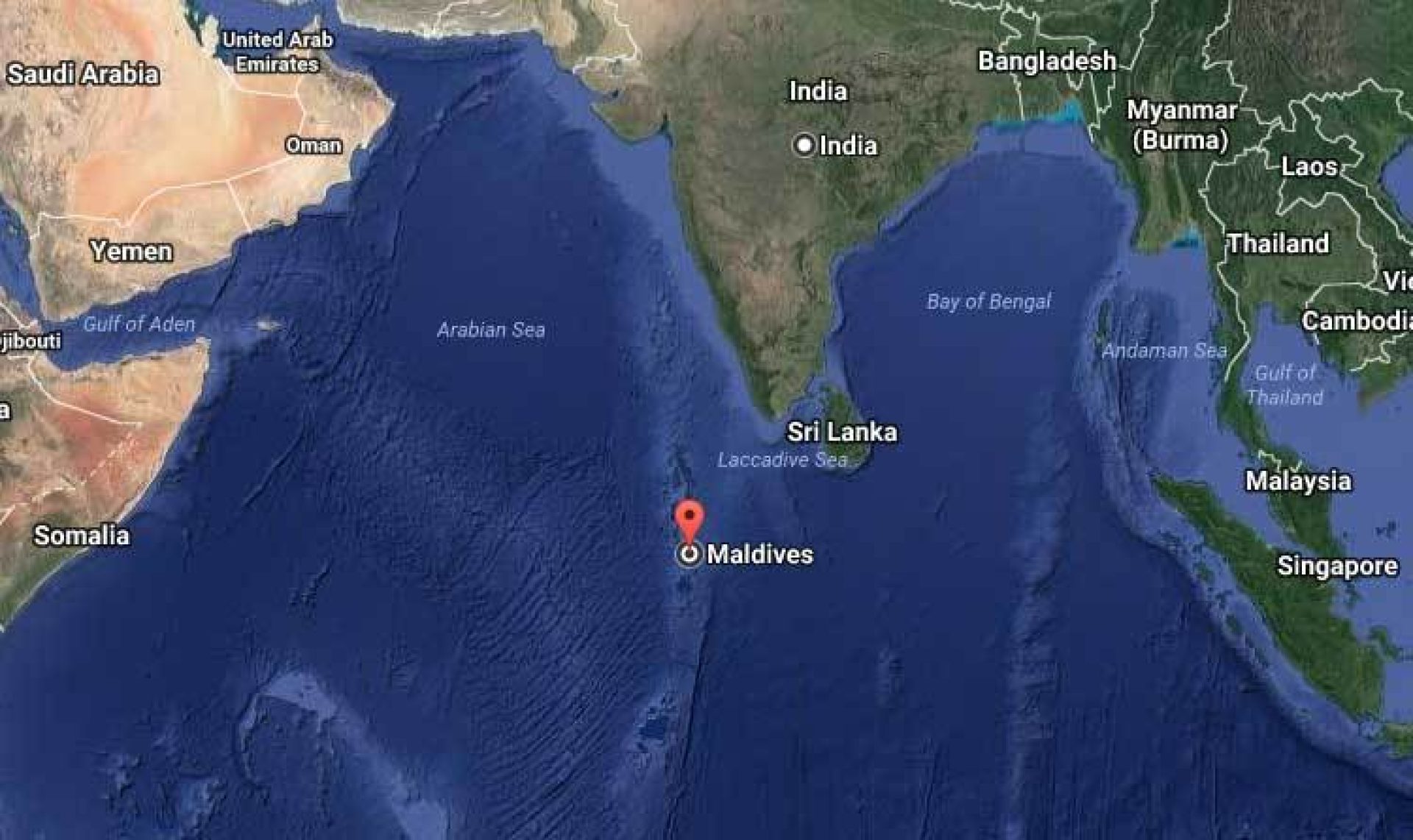
Fig 1. Maldives and India on Global Mapping Services (Photo: File, Google Earth Satellite Imagery)
It is a geopolitical reality as old as the maps themselves: geography dictates destiny.
For the Republic of Maldives, a picturesque archipelago with a citizen population of under 400,000, that destiny is inextricably tied to India. Sitting astride the world’s most critical Indian Ocean shipping lanes, the Maldives holds immense structural leverage. Yet, as the two nations mark 60 years of formal diplomatic relations, a turbulent multi-year stretch of populist friction has given way to a profound lesson in statecraft: political rhetoric is fluid, but geographic and economic dependencies are permanent.
The Anatomy of a Diplomatic Rescue
The bilateral relationship faced its most severe modern test following the 2023 Maldivian presidential election. President Dr. Mohamed Muizzu rode into office on the momentum of a highly politicized, domestic "India Out" campaign. External information operations and populist narratives created a volatile diplomatic environment, straining historical ties.
In the conventional theater of international relations, an asymmetric power of India’s scale might have responded to such provocations with economic sanctions or diplomatic isolation. Instead, New Delhi chose institutional pragmatism over geopolitical retribution.
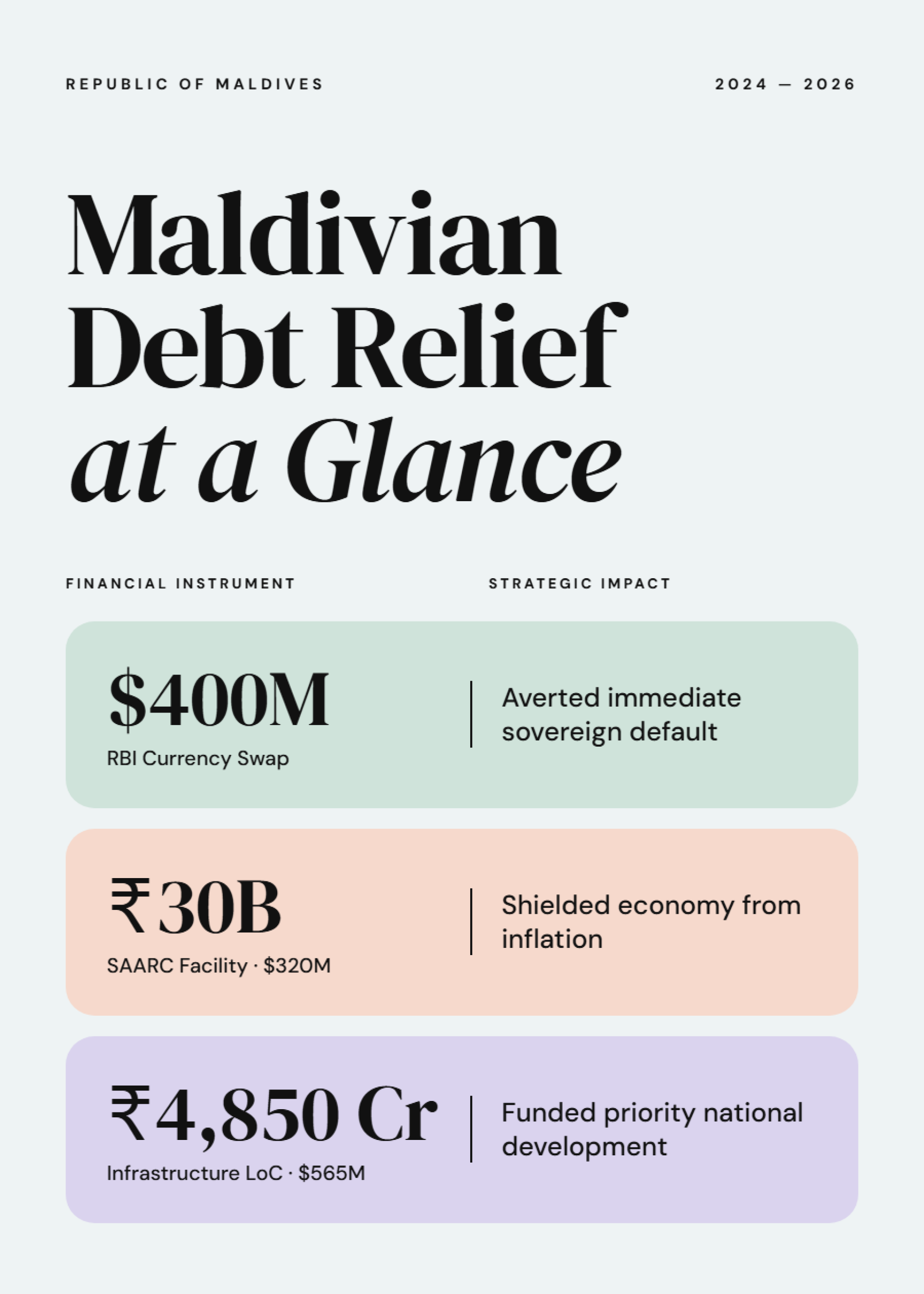
Driven by Prime Minister Narendra Modi’s SAGAR (Security and Growth for All in the Region) framework, India acted not as an aggressive regional hegemon, but as a stabilizing anchor. When the Maldives faced a catastrophic liquidity crunch and imminent default on its $500 million Sukuk obligations, the Reserve Bank of India (RBI) quietly stepped in as the lender of last resort.
In addition to these massive capital injections, New Delhi slashed the Maldives’ annual debt repayment obligations on Indian-funded projects by 40%. By absorbing domestic insults and securing Malé’s fiscal survival, India proved that structural interdependence trumps political theater.
A History Forged in Crisis
Skeptics often view regional diplomacy through a lens of cold calculation, but the structural bond between New Delhi and Malé has been forged in blood, water, and life-saving medicine. India’s enduring role as the Maldives' primary crisis first-responder is defined by three historic interventions:
Operation Cactus (1988): When a mercenary-backed coup threatened to overthrow the legitimate Maldivian government, New Delhi deployed airborne and naval forces within hours, expending blood and treasure to safeguard Maldivian sovereignty.
Operation Neer (2014): When a catastrophic fire crippled Malé’s primary desalination plant, Indian naval vessels and aircraft bypassed bureaucratic delays to deliver fresh water, sustaining the capital city through an acute existential crisis.
Operation Sanjeevani (2020–2022): During the supply chain collapses of the global pandemic, India ensured an uninterrupted flow of staple foods, essential medicines, and critical vaccine doses when global access was severely restricted.
Bridges, Airports, and Silent Security
Today, the physical landscape of the Maldives bears an undeniable Indian blueprint. What began decades ago as a flow of skilled regional labor has evolved into massive, capital-intensive engineering projects.
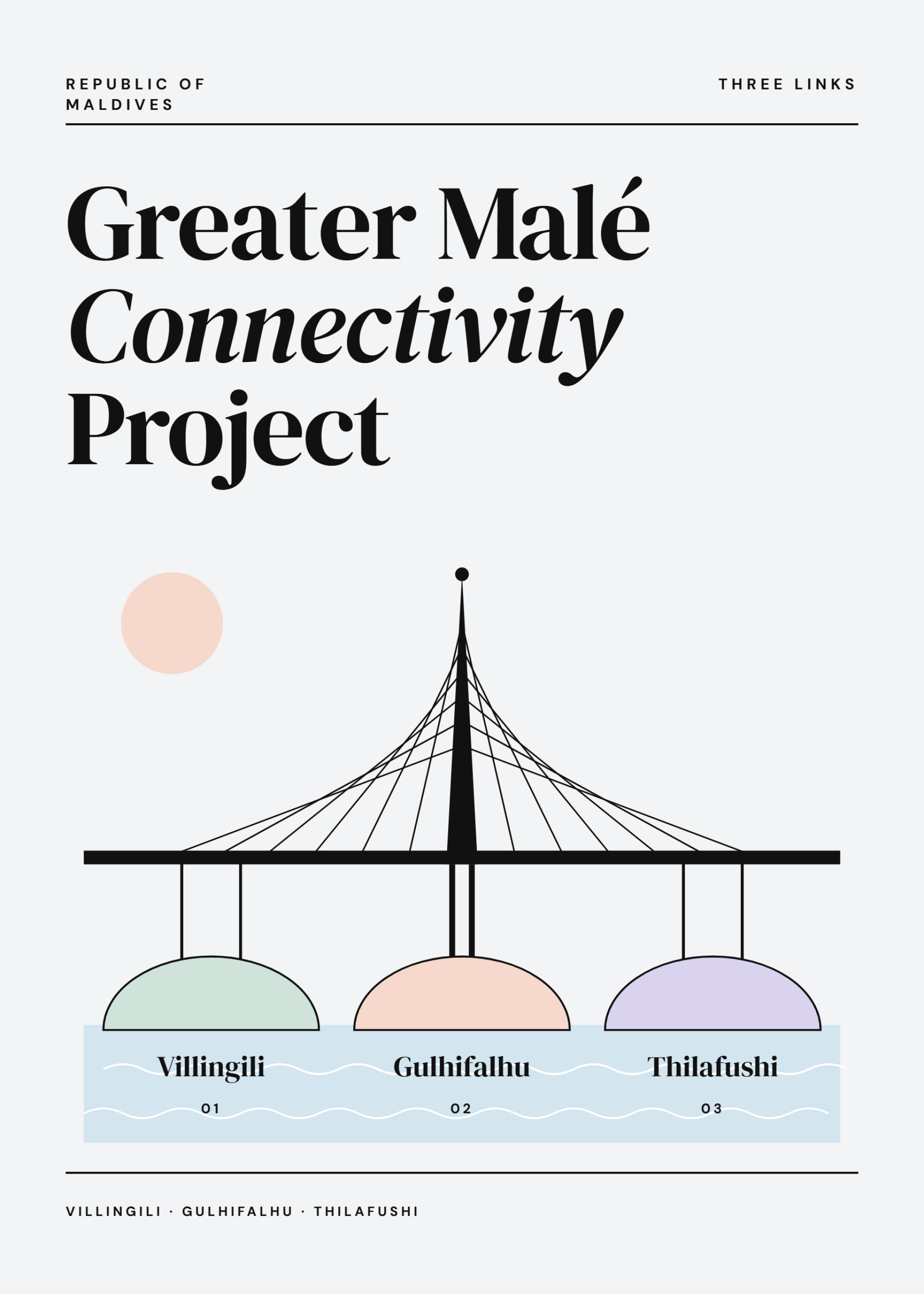
The crown jewel of this integration is the multi-million-dollar Greater Malé Connectivity Project (GMCP), a sprawling bridge and causeway network physically linking the capital with the economic hubs of Villingili, Gulhifalhu, and Thilafushi. This is flanked by major healthcare investments, like the specialized Dharumavantha Hospital complex, and the comprehensive redevelopment of the Hanimaadhoo International Airport to unlock northern commercial corridors.
Parallel to this visible infrastructure is a silent, yet resilient, defense architecture. Despite public political friction surrounding the presence of Indian technical personnel, the stark realities of maritime security prevented a fracturing of military ties.
Malé continues to actively collaborate with the Indian military through the Colombo Security Conclave (CSC) and the trilateral Exercise Dosti frameworks. By providing continuous maritime surveillance, real-time intelligence sharing, and asset maintenance, India remains the fundamental guarantor of the Maldives' exclusive economic zone against transnational piracy and illegal fishing.
The Reality of Asymmetric Interdependence
As the dust settles on the 2024–2026 geopolitical reset, the baseline remains clear. As a micro-state navigating an increasingly contested Indian Ocean, the Maldives cannot afford the luxury of isolationism or permanent ideological friction with its closest neighbor.
While Malé will logically continue to pursue a multi-vector foreign policy to maximize development capital from other global powers, including China, its strategy must be governed by calculation rather than emotion.
New Delhi’s strategic demand has never changed: the Maldivian archipelago must not be leveraged by hostile external actors to threaten the security of their shared backyard. For the Maldives, future statecraft will require a delicate balancing act—preserving sovereign autonomy while embracing the undeniable benefits of a neighbor that has proven, time and again, to be its ultimate safety net.
About the Authors;
Mohamed Hoodh Ibrahim is the Chairperson of the Maldives Centre for Policy Research, and Political Scientist and Researcher at The Maldives National University. He has published research for UNESCO, UNDP, ADB and CCPR. Hoodh also serves as the elected UNESCO IYF Regional Facilitator for Asia Pacific, and the Vice President of the Maldivian Red Crescent Governing Board.
Ibrahim Shaeman is the Acting Secretary General of the China-Maldives Culture, Tourism, and Trade Promotion Association (CMCTTPA), working alongside fellow early career academics and entrepreneurs to foster cultural, tourism, and trade initiatives. His academic background is in Political Science and International Relations, with a special interest in International Political Economy.