Polling Public Support for the 4th April Referendum and Local Council Elections 2026
April 2, 2026
The Maldives Centre for Policy Research (MCPR) polled public support for the April 4th Referendum on the ratification of the Eighth Amendment to the Constitution, which provides for the Presidential and People's Majlis elections to be held concurrently and for a change to the term of the People's Majlis, and the Local Council Elections 2026.
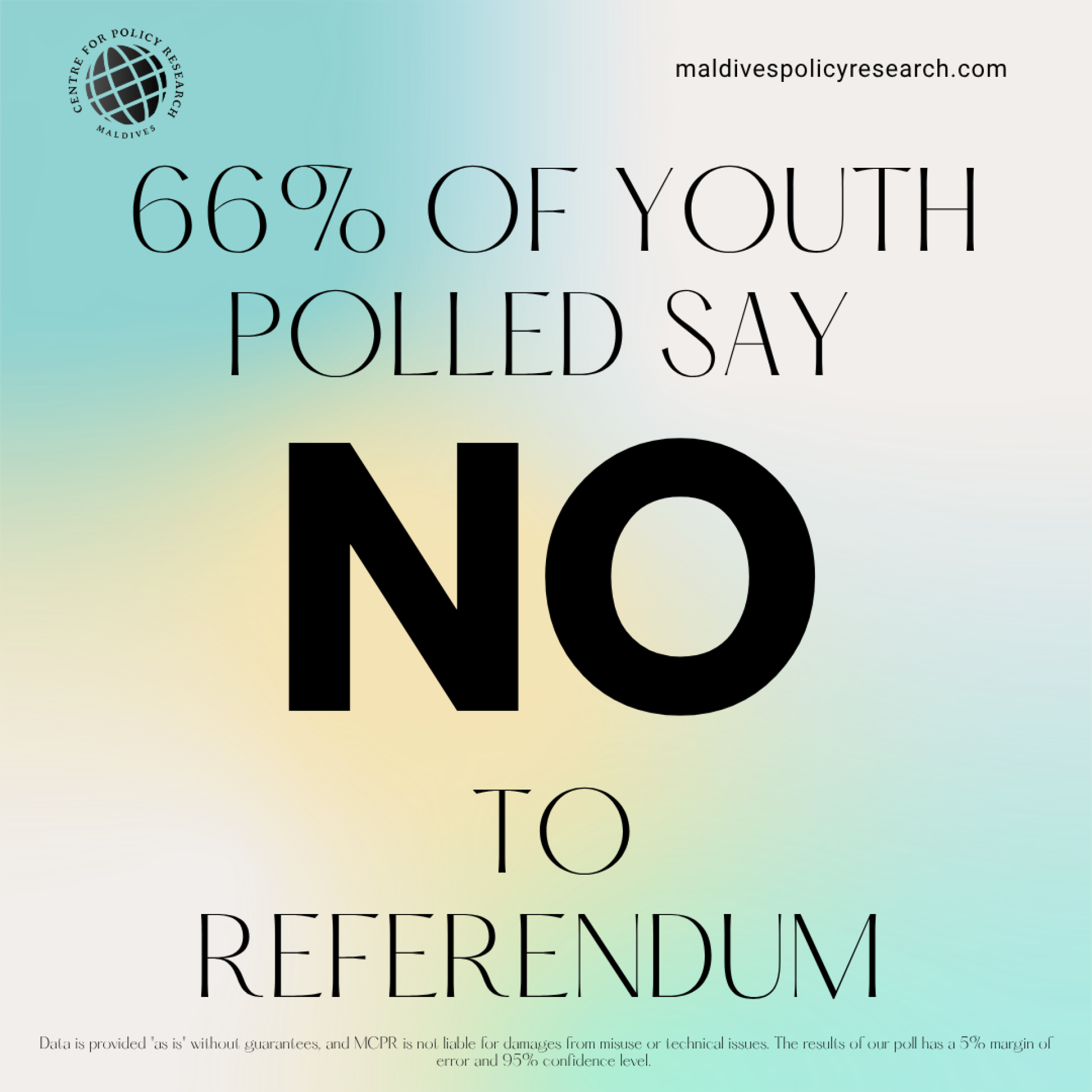
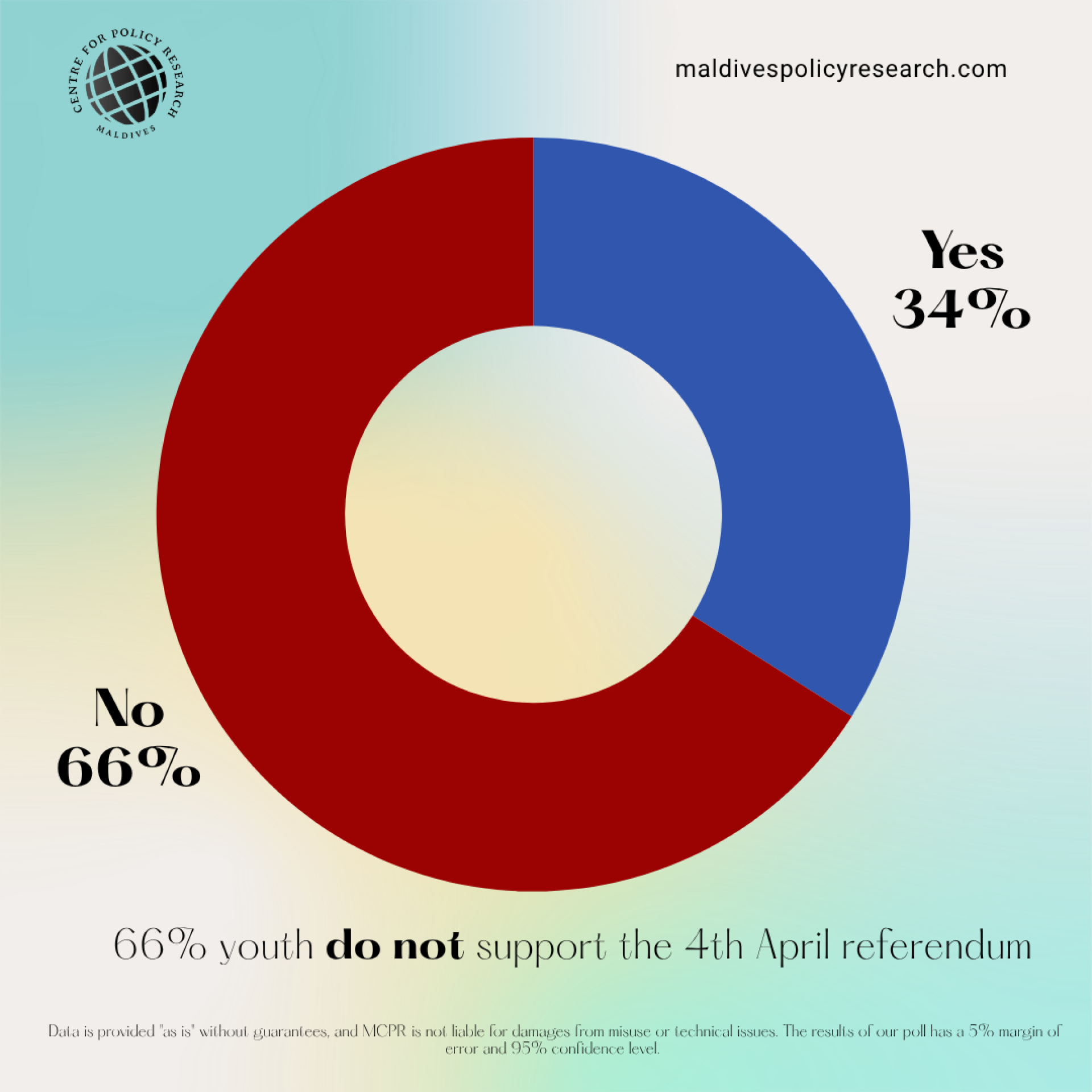
More than 60% of the Maldivian public surveyed ‘do not support’ the referendum proposed by the incumbent government, of holding the Presidential and People’s Majlis elections concurrently and changing the term of the People’s Majlis. The referendum is set to take place on Saturday, 4th April 2026, alongside the 2026 Local Council Elections.
The Maldives Centre for Policy Research (MCPR) asked the Maldivian public to share their views on the referendum and the local council elections. Youth voters, in particular, showed high levels of disapproval. This reflects generational differences in attitudes and engagement which may stem from concerns in regard to concentration of power, potential undermining of checks and balances and perceptions that reforms as such could reduce democratic accountability.
Many participants reported that they felt insufficiently informed about the proposed referendum and questioned the credibility of the information they had received. Voter knowledge and trust are critical factors influencing engagement and support and when individuals view information as inadequate or inaccurate, they are more inclined to withdraw support or outright reject the changes (Norris, 2011).
EXECUTIVE SUMMARY
This study examines public sentiment surrounding the April 4, 2026, Maldivian referendum proposing concurrent Presidential and People’s Majlis elections. Utilizing a mixed-mode sample (N=388) captured via digital networks and random digit dialing (RDD), the research identifies a significant 60% disapproval rate for the constitutional amendment. Furthermore 78% of respondents now prioritizing autonomous, independent political alignment over familial socialization.
Despite government narratives framing the referendum through "Fiscal Logic" (administrative cost-savings), 78% of the electorate rejected these savings as a valid justification for altering the constitutional framework, prioritizing "Institutional Protectionism" and the separation of powers instead.
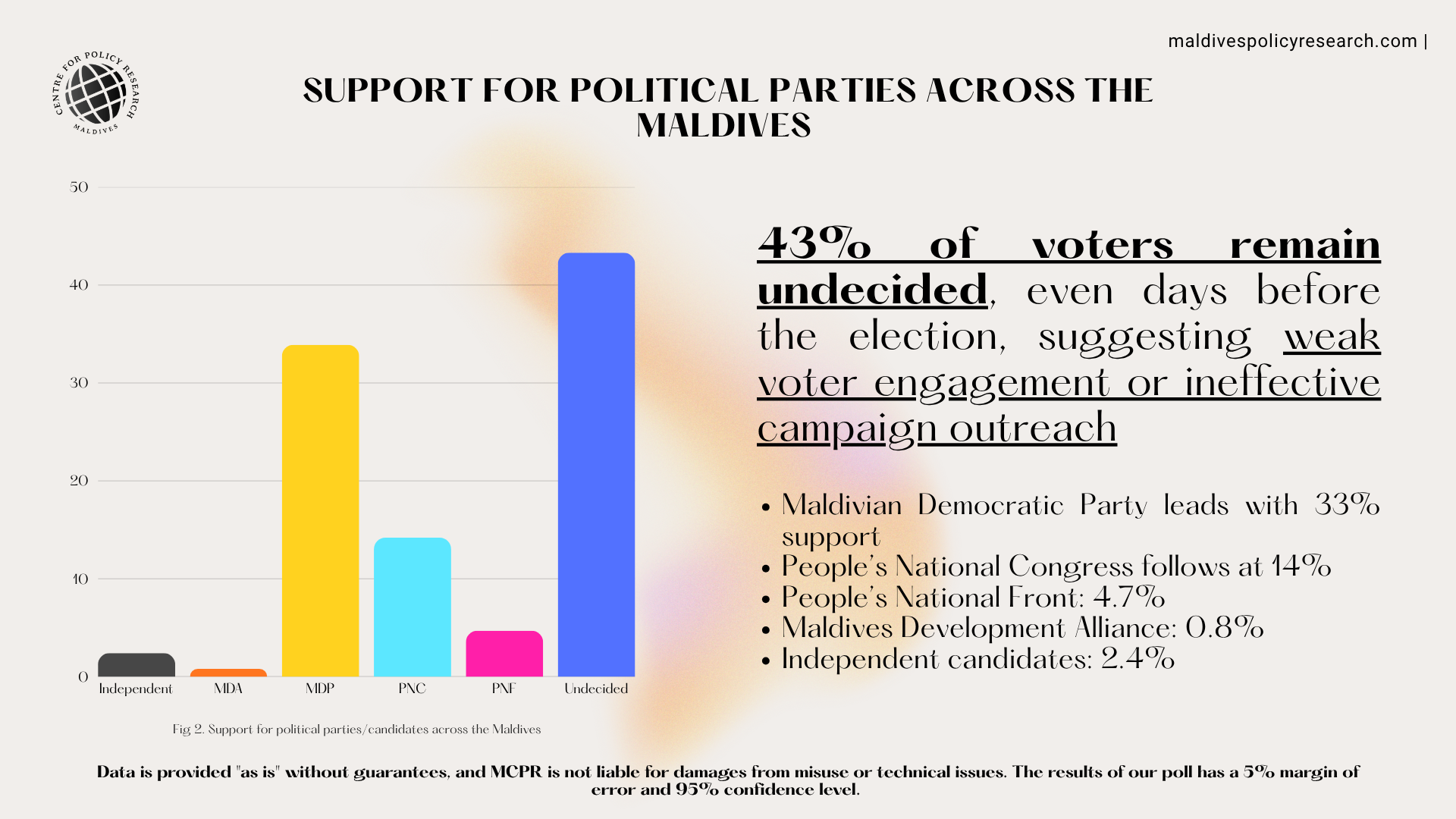
The data further reveals that while social media has become the primary conduit for youth engagement, a "firehose of falsehood" and information saturation have contributed to a high proportion of uninformed and confused undecided voters (43% nationally), signaling a strategic withholding of support and a baseline of political cynicism.
Ultimately, the results may suggest that the modern Maldivian voter is on a journey transitioning from a Socialization Model to a Rational Choice Model, viewing constitutional integrity as an indivisible public good rather than a transactional administrative ledger.